09.09.2026 20:56
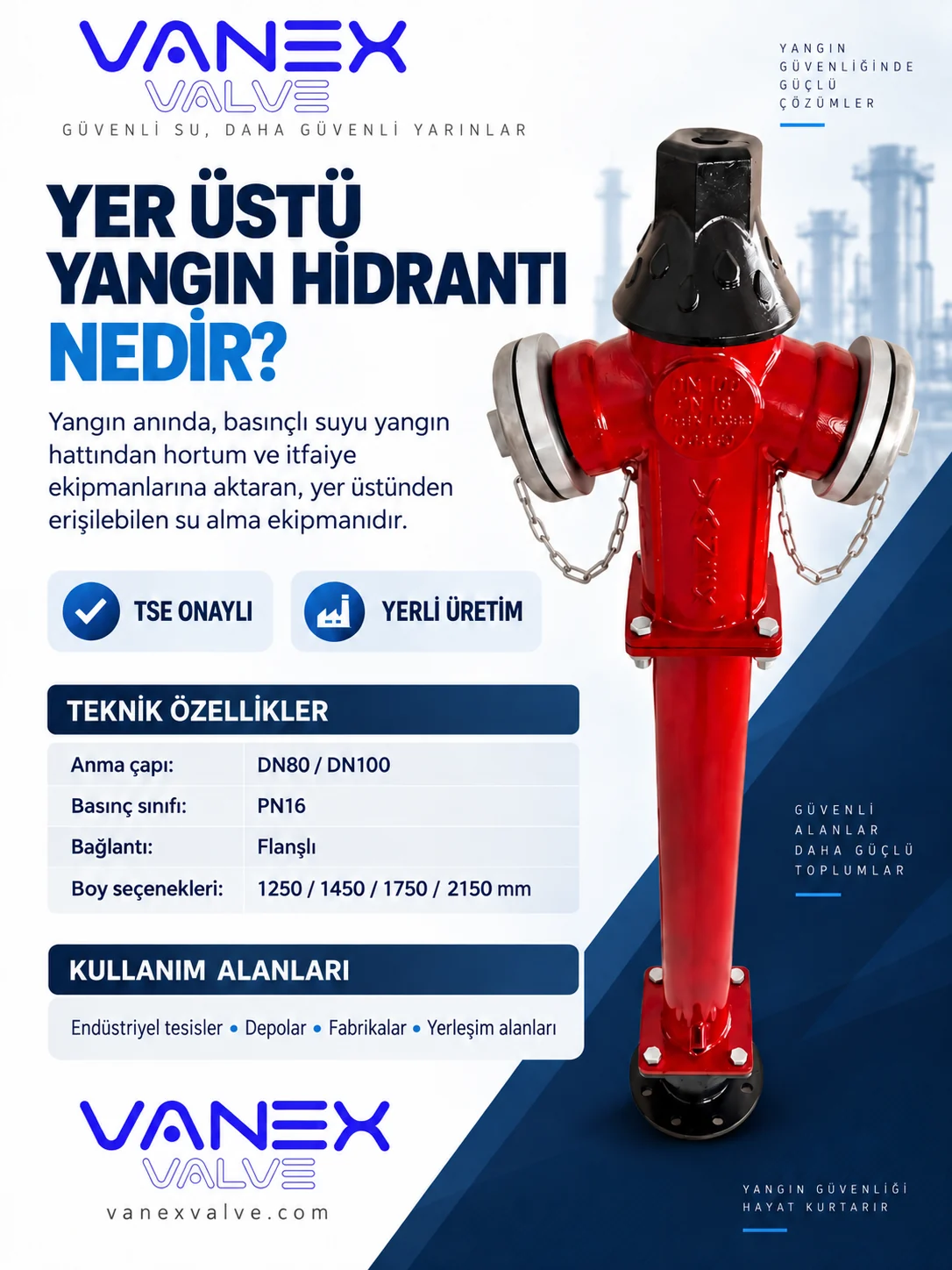
An above-ground fire hydrant is a water access point with outlets located above ground level. It enables firefighting teams to draw water from a water main or dedicated fire-water system through hoses and compatible fittings. Hydrants provide accessible connection points around buildings and across large sites.
A hydrant does not store water or generate pressure by itself. The available flow and pressure depend on the water source, pumps, pipework, simultaneous demand and the hydraulic characteristics of the installation. Selecting a hydrant therefore requires an assessment of the complete fire-water system.
How does an above-ground fire hydrant work?
The hydrant creates a controlled flow path between the supply pipe and the connected firefighting hose. Authorized personnel connect compatible equipment to the outlet and operate the hydrant in accordance with the manufacturer’s instructions. Opening the operating mechanism allows water to enter the connected line.
After use, the hydrant must be closed according to the specified procedure. Sudden changes in flow can cause pressure surges, so operation must be controlled. This is an overview of the working principle; actual operation must follow the product manual and the site’s emergency procedures.
Dry-barrel and wet-barrel designs
A dry-barrel hydrant has its main valve underground and drains its barrel after use through a suitable drainage arrangement. A wet-barrel hydrant remains filled with water. Freezing conditions affect which design is suitable. Technical reference: AVK
Automatic drainage should not be assumed for every above-ground hydrant. The selected model’s documentation must confirm its drainage features and the conditions required for installation.
Main components
A typical hydrant includes a body, operating mechanism, stem, sealing components, outlets, outlet caps and an inlet connection. Additional features, such as drainage or a breakaway arrangement, depend on the design.
Body material, protective coating and seal specifications should be checked in the technical datasheet. Accessories—including the base elbow, connecting hardware and operating key—must also match the hydrant and the site installation.
Where are hydrants used?
Above-ground hydrants may be used at factories, industrial parks, warehouses, logistics facilities, commercial premises, residential developments and infrastructure sites. The need for hydrants and their arrangement must follow the project’s fire protection design.
Visibility alone is not enough. Fire-service access, working space for hose connections and unobstructed access must be maintained. Parked vehicles, stored goods and landscaping must not prevent crews from reaching or operating the hydrant.
What do DN80, DN100 and PN16 mean?
DN identifies the nominal connection size; it does not define the available flow on its own. Choosing DN80 or DN100 requires consideration of the required firefighting flow, available pressure, pipe losses and simultaneous demand.
PN16 is a nominal pressure designation. It does not mean that a hydrant will always discharge water at 16 bar. Permissible operating conditions must be checked in the product documentation, while available site pressure must be established through system calculations and appropriate measurements.
Selection and installation considerations
Establish the required flow and pressure during operation.
Check inlet connections, outlet couplings and hose compatibility.
Distinguish overall height from burial depth and above-ground height.
Account for climate, freezing risk, soil and drainage conditions.
Review materials, coatings, maintenance access and spare parts.
Verify the documentation and performance required by the project specification.
Qualified teams should install the hydrant with adequate support and without imposing unnecessary loads on the pipework. Connections, operation and required performance checks should be recorded during commissioning. Positioning distances and test values must come from the approved design rather than a single figure assumed to apply to every site.
Why is maintenance necessary?
A hydrant may remain unused for long periods but must be ready when needed. Inspections should address physical damage, caps, seals, connections, corrosion and the operating mechanism. Where fitted, drainage must also be checked.
Inspection intervals and methods must follow applicable local requirements and the manufacturer’s instructions. Leakage or difficulty operating the hydrant should be documented and corrected by qualified personnel.
VANEX VALVE hydrant solutions
VANEX VALVE lists PN16 above-ground hydrants in DN80–DN100 sizes. View the hydrant product to discuss suitable dimensions and connections for your project.
Include the connection size, required height, outlet type, quantity and project specification when requesting a quotation.
Technical information and quotations: vanexvalve.com · info@vanexvalve.com