13.08.2026 16:14
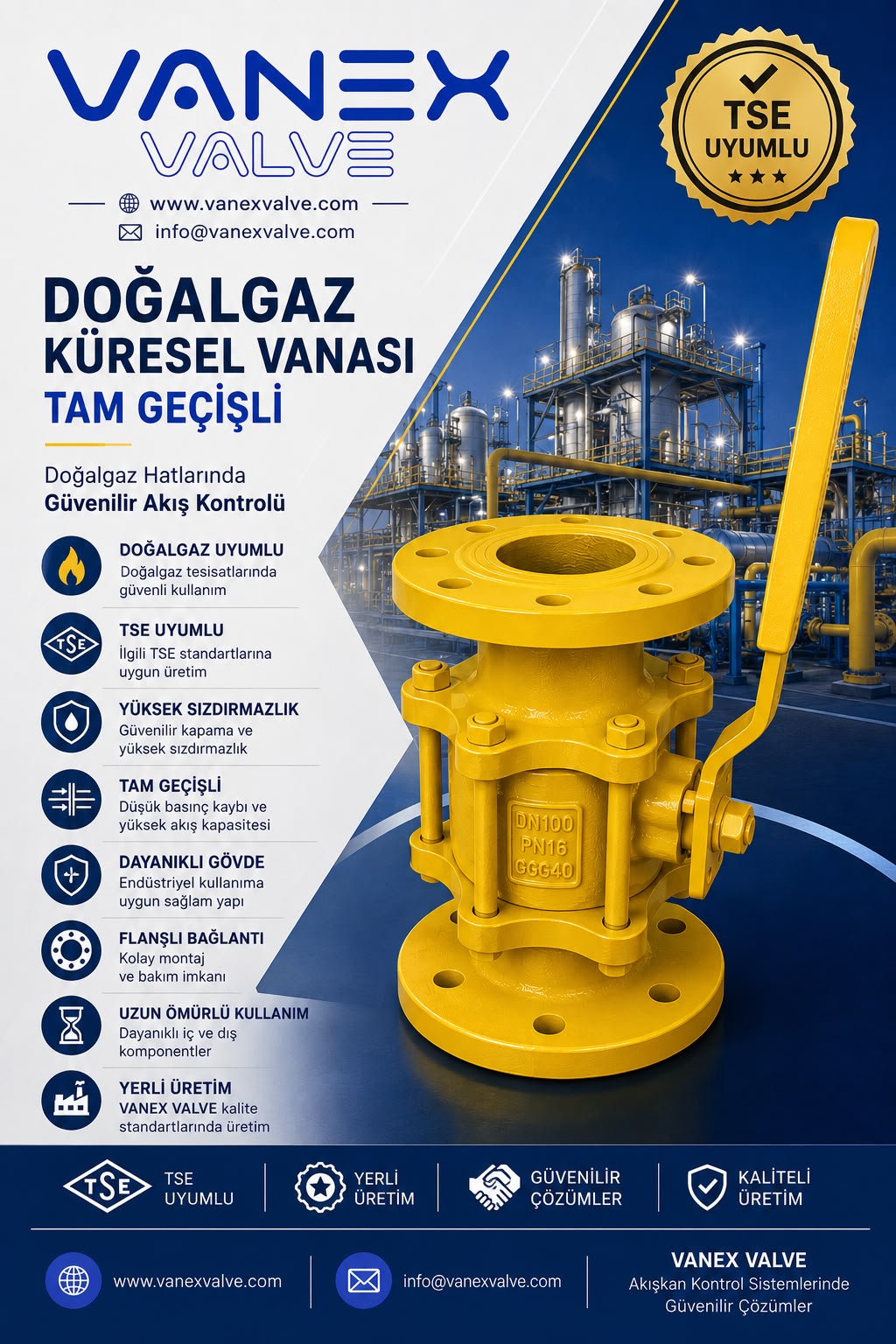
A PN16-PN25 natural gas ball valve is a quarter-turn shut-off valve designed for controlling the isolation of natural gas or other compatible gases in piping systems. Inside the valve is a ball with a bore through its center. Rotating the ball approximately 90 degrees opens or closes the flow path.
When the bore is aligned with the pipeline, gas can flow through the valve. When the ball is rotated by 90 degrees, the flow passage is blocked.
Ball valves are widely used because of their rapid operation, compact construction, low pressure loss and high sealing capability when properly designed and selected.
PN16 and PN25 are nominal pressure designations. PN is a numerical reference designation related to pressure and should not be interpreted as a guarantee that a valve can operate at exactly 16 or 25 bar under every temperature and service condition. The manufacturer's pressure-temperature ratings and material limitations must always be checked.
What Is a PN16 Natural Gas Ball Valve?
A PN16 ball valve is intended for piping systems designed around the PN16 pressure class.
For natural gas service, pressure rating alone is not sufficient. The body materials, seats, stem seals, connections, manufacturing specifications and relevant approvals must also be suitable for gas service.
PN16 gas ball valves may be used in suitable building installations, industrial gas systems, boiler rooms, burner supply lines and gas distribution systems where the operating conditions are within the valve's approved limits.
What Is a PN25 Natural Gas Ball Valve?
PN25 ball valves are designed for systems requiring a higher nominal pressure class.
They may be selected for industrial natural gas systems, process plants, gas distribution equipment and other installations with higher design pressure requirements.
A PN25 marking does not automatically mean that the valve is approved for natural gas. Gas compatibility, operating pressure, operating temperature, seat materials, body construction and applicable standards must all be verified.
Difference Between PN16 and PN25
The primary difference is the nominal pressure class.
PN16 is selected for compatible PN16 piping systems.
PN25 is used where a higher nominal pressure class is required.
Flange dimensions and valve construction may differ even at the same DN size.
The pipeline flange standard must therefore be checked before installation.
PN rating should never be the only valve selection criterion.
How Does a Natural Gas Ball Valve Work?
The valve contains a spherical closure element with a central bore.
Open position: The bore is aligned with the pipeline and gas passes through the valve.
Closed position: The ball is rotated approximately 90 degrees and the solid portion of the ball blocks the flow.
The quarter-turn design enables very fast isolation.
Ball valves are primarily intended as on/off isolation valves. Unless a valve is specifically designed for throttling, prolonged operation in a partially open position should generally be avoided.
Main Features of PN16-PN25 Natural Gas Ball Valves
Depending on the specific valve design, common features may include:
High sealing performance
Quarter-turn operation
Fast opening and closing
Low pressure loss
Compact construction
Full-bore or reduced-bore designs
Flanged or other connection options
Manual, gearbox or actuator operation
Gas-compatible sealing components
Durable body construction
Various DN sizes
PN16 and PN25 pressure classes
Pneumatic or electric actuator compatibility
Suitability for industrial automation applications
Full-Bore Ball Valve Advantages
In a full-bore ball valve, the internal flow passage is designed to be close to the internal diameter of the connected pipeline.
This helps minimize flow restriction and pressure drop. Full-bore construction can therefore be particularly beneficial in applications requiring high flow capacity and low pressure loss.
Materials Used in Natural Gas Ball Valves
Materials vary according to manufacturer, valve type and application.
Valve bodies can be manufactured from materials such as:
Ductile iron
Carbon steel
Stainless steel
Other application-specific metallic materials
Ball, stem, seat, O-ring and gasket materials must also be compatible with the gas, temperature and pressure conditions.
The valve datasheet should therefore always be reviewed before selection.
Applications of PN16-PN25 Natural Gas Ball Valves
Depending on certification and project requirements, gas-compatible ball valves can be used in:
Natural gas distribution lines
Industrial gas systems
Factory gas installations
Boiler rooms
Burner gas supply lines
Gas control stations
Commercial buildings
Heating plants
Energy facilities
Process gas systems
Gas metering installations
Machinery gas supply systems
Gas isolation points
For manually operated metallic ball valves used in building gas installations, EN 331 is an important European standard covering construction, performance, safety, testing and marking within its defined scope. EN 331:2015 has specific limits concerning gas families, installation conditions, pressure and temperature; higher-pressure industrial applications may therefore require other standards and project-specific requirements.
How to Select a Natural Gas Ball Valve
Correct selection requires several parameters to be considered together.
1. Gas type
Confirm that all valve materials are compatible with natural gas or the particular gas being handled.
2. Operating pressure
Determine normal operating pressure as well as maximum expected system pressure.
3. Pressure class
Select the appropriate PN class according to the piping system and design requirements.
4. Nominal diameter
Choose the correct DN according to pipeline size and required flow capacity.
5. Connection type
Verify flange, threaded or other connection dimensions and standards.
6. Operating temperature
Check both body and sealing-material temperature limitations.
7. Full bore or reduced bore
Where high flow capacity and low pressure drop are important, a full-bore design may be preferable.
8. Operation method
Depending on the installation, the valve can be manually operated or equipped with a gearbox, pneumatic actuator or electric actuator.
9. Tightness
Body, stem and seat sealing performance are particularly important for gas applications.
10. Standards and approvals
Applicable national regulations, project specifications and gas utility requirements should always be verified.
Installation Considerations
Before installation:
Clean the pipeline.
Remove welding debris, scale and foreign particles.
Check flange alignment.
Do not use the valve to compensate for pipe misalignment.
Use suitable gaskets and fasteners.
Tighten flange bolts evenly.
Follow manufacturer installation instructions.
Perform required leak and pressure tests before commissioning.
Gas system installation should be carried out by appropriately qualified personnel.
PN16 or PN25: Which Should Be Selected?
A higher PN rating does not automatically make PN25 the better choice.
The correct valve should be selected according to:
operating pressure + design pressure + temperature + DN size + connection standard + gas compatibility + certification + project specification.
Conclusion
PN16-PN25 natural gas ball valves provide fast and reliable isolation of gas pipelines. Their quarter-turn operation, compact construction, low pressure loss and effective sealing make ball valves an important component of many natural gas systems.
Safe valve selection, however, depends on much more than the PN value. Pressure, temperature, gas compatibility, material selection, connection dimensions, certification and applicable project requirements must all be evaluated.