30.06.2026 09:05
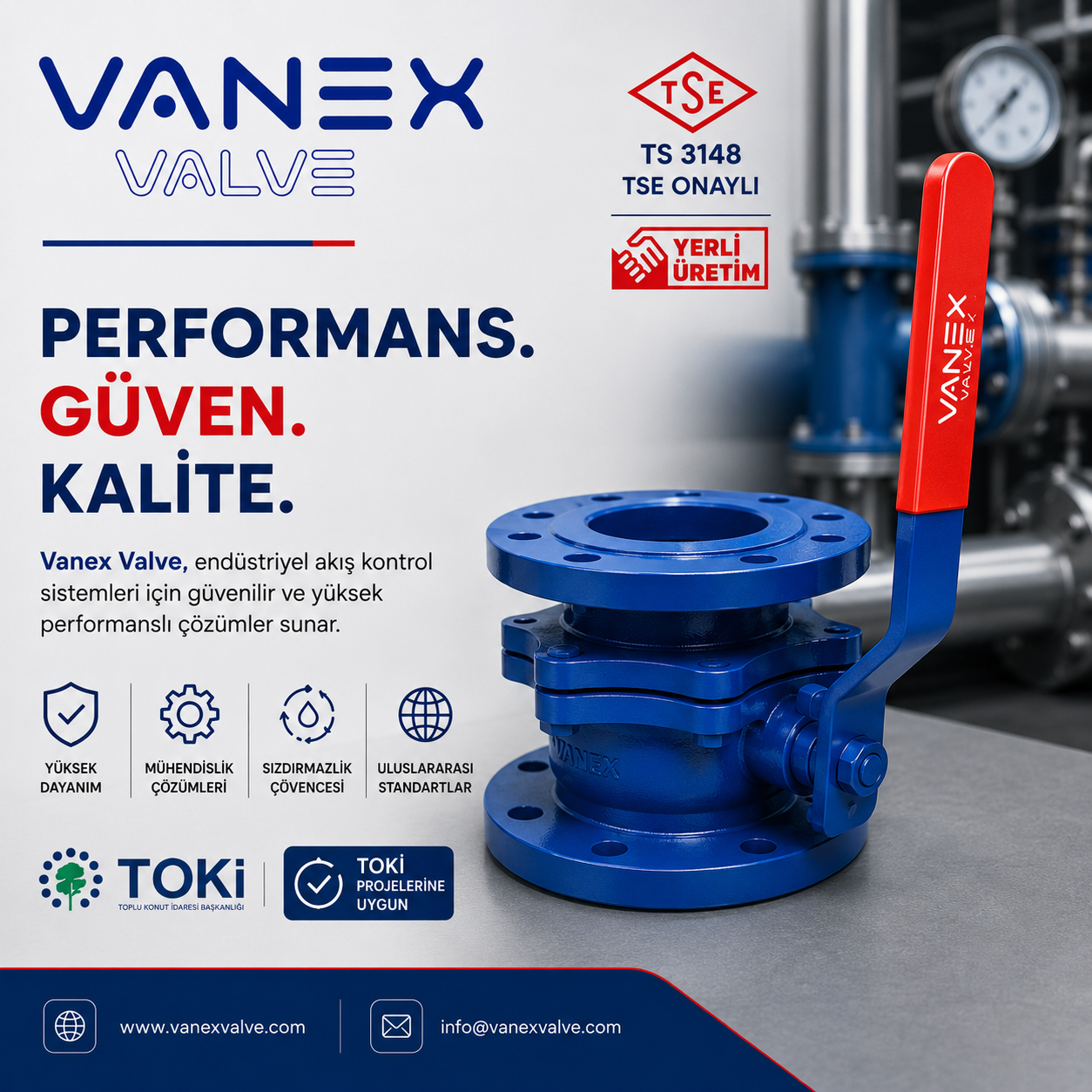
A Ball Valve is a quarter-turn valve designed to control the flow of fluids through a rotating ball with a central bore. When the bore is aligned with the pipeline, the fluid flows freely. When the ball is rotated 90°, the flow is completely shut off.
Ball Valves are among the most widely used industrial valves thanks to their excellent sealing performance, low pressure loss, quick operation and long service life.
They are widely used in water supply systems, potable water networks, natural gas pipelines, oil and petrochemical plants, chemical processing, steam systems, HVAC applications, fire protection systems and industrial process lines.
Advantages
Excellent sealing performance
Low pressure loss
Quarter-turn (90°) operation
Easy to operate
Long service life
Low maintenance requirements
High durability
Available in various pressure ratings and connection types
Applications
Water distribution systems
Potable water systems
Natural gas pipelines
Fire protection systems
HVAC systems
Heating and cooling systems
Oil and petrochemical plants
Chemical industry
Industrial process lines
Working Principle
When the ball bore is aligned with the pipeline, the fluid passes through freely. Rotating the handle by 90° turns the bore perpendicular to the pipeline, completely stopping the flow.
Technical Specifications
Body: Ductile Iron / Carbon Steel / Stainless Steel / Brass
Ball: Stainless Steel (AISI 304 / AISI 316)
Seat Material: PTFE / RPTFE
Pressure Rating: PN16, PN25, PN40
Connection: Threaded, Flanged, Welded
Nominal Size: DN15 – DN600