27.07.2026 17:06
Ball valves are flow control equipment used in many different areas, from water installations to natural gas lines, industrial processes, steam, chemical, energy, and fire systems. Even between two ball valves with the same nominal diameter, significant price differences can be observed in the market.
The main reason for this is that the price of a ball valve is not determined solely by its diameter. Many factors directly affect the cost, including body material, pressure class, connection type, ball and stem material, sealing elements, operating temperature, manufacturing technology, certifications, and valve design.
Therefore, when purchasing a ball valve, instead of only comparing prices, it is necessary to evaluate the technical specifications suitable for the installation where the valve will be used.
1. Ball Valve Diameter – DN Size
One of the most fundamental factors affecting ball valve prices is the nominal diameter, or DN size.
As the DN value increases:
- The amount of material used in the valve body increases.
- The ball diameter increases.
- The stem and fittings are designed to be stronger.
- The dimensions of the flanges increase.
- Processing time may increase.
- The total weight of the valve increases.
- Production and transportation costs increase.
For example, the amount of metal used in the production of a DN25 ball valve and a DN100 ball valve are not the same as the production requirements. Especially in large-diameter industrial ball valves, the price increase becomes more pronounced with the diameter.
However, it should not be expected that all valves of the same DN size will be at the same price level. Other characteristics such as pressure class and materials used play a significant role in the price.
2. Body Material
One of the most important factors determining the price of a ball valve is the material from which the valve body is made.
Depending on the application area, ball valves can be produced from different materials such as:
- Brass
- Cast iron
- Ductile iron
- Carbon steel
- Stainless steel
- Forged steel
- Special alloys
Brass Ball Valves
Generally used in small-diameter water, air, and building installations. Due to their compact structure and suitability for mass production, they can offer economical solutions in many applications.
Spheroidal Cast Iron Ball Valves
Preferred for water distribution systems, industrial facilities, and larger-scale applications. Body strength and manufacturing structure affect the price.
Carbon Steel Ball Valves
Can be used in oil, natural gas, steam, and industrial process systems. Models designed for applications requiring higher pressure and temperature may have higher costs than standard plumbing valves.
Stainless Steel Ball Valves
Preferred in systems containing chemicals, food, pharmaceuticals, petrochemicals, and corrosive fluids.
Different quality grades, especially AISI 304 and AISI 316 stainless steel, have a significant impact on cost.
Generally, as the cost of the alloy used increases, the selling price of the valve also increases.
3. Pressure Class – PN Value
Operating pressure and pressure class are important factors in ball valve prices.
In industrial valves;
- PN10
- PN16
- PN25
- PN40
Different pressure classes can be used.
In a valve that needs to withstand higher pressure, the body, ball, shaft, fittings, and sealing system must be designed according to the operating conditions.
For example, in the same DN size;
DN50 PN16 and DN50 PN40
ball valves should not be expected to have the same price.
The design and material properties used in a PN40 class product may differ in order to be suitable for higher pressure conditions.
Therefore, when selecting a valve, not only the diameter but also the DN + PN value should be considered together.
4. Connection Type
How the ball valve is connected to the system also affects the price.
The main connection types are:
- Threaded connection
- Flanged connection
- Welded connection
- Socket welded
- Union connection
Threaded Ball Valve
Generally preferred in small diameter systems. Due to its compact structure, it can be economical in many standard installation applications.
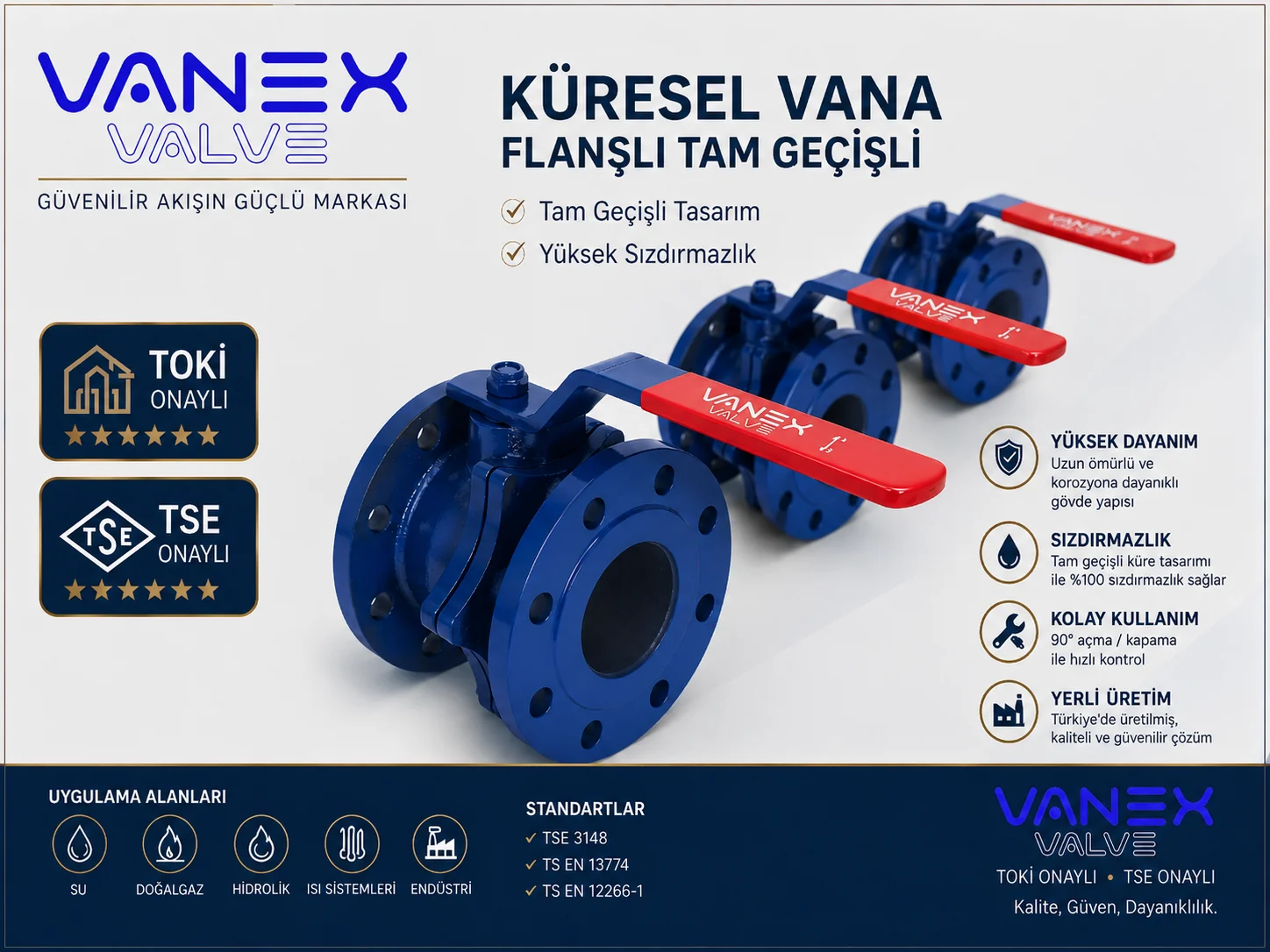
Flanged Ball Valve
Widely used in industrial plants and large diameter pipelines.
In the production of flanged valves;
- More materials,
- Flange processing operations,
- Connection holes,
- Larger body structure
These factors can cause cost differences.
Welded Ball Valve
These are models that are connected to the pipeline by welding. They can be used especially in lines requiring high reliability and permanent connection.
The connection technology used in the valve directly affects the production cost and therefore the price of the product.
5. Full Bore or Narrow Bore
Ball valves are basically classified according to their inner bore diameter as follows;
Full Bore
and
Reduced Bore
can be divided into these types.
Full Bore Ball Valve
In full bore ball valves, the diameter inside the ball is designed to be close to the pipe diameter.
Thanks to this design;
- Pressure loss can be reduced.
- Flow is provided more easily.
- The flow characteristics within the line can be maintained.