04.10.2026 16:55
Fire hydrant height should be selected by considering the connection depth of the fire water main, the finished ground level, local freezing conditions and the operational needs of firefighters. A correctly sized above-ground hydrant must connect properly to the underground pipework while keeping its outlets and operating mechanism accessible.
The dimension shown in a catalogue is therefore only the starting point. Before selecting a model, establish exactly which reference points that dimension describes.
1. Overall height, above-ground height and bury depth
Three different dimensions must be distinguished:
Overall height: The distance between the lower and upper reference points shown on the manufacturer’s drawing.
Above-ground height: The part of the hydrant above finished ground level. The height of the hose outlets must also be checked separately.
Bury depth: The distance between ground level and the underground reference point specified by the manufacturer. This may relate to the inlet flange, pipe centreline or another defined point.
For example, an overall height of 1750 mm does not mean that the hydrant will stand 1750 mm above ground. Pipe cover is also different from inlet flange depth. The geometry of the hydrant elbow or base fitting affects the connection level.
2. Assessing the pipe connection depth
First, identify the hydrant connection elevation from the approved fire protection drawings. Do not confuse the pipe centreline, the top of the pipe and the hydrant inlet flange.
A deeper connection may require a longer underground barrel to maintain the intended above-ground position. However, selecting the longest available model simply because the main is deep is not a reliable method. The hydrant dimensions, connecting fittings and manufacturer’s ground-line requirements must all be checked together.
An unsuitable length can leave the hydrant buried too deeply or positioned incorrectly above the finished surface.
3. How freezing conditions affect selection
In cold regions, freezing risk is an important consideration when establishing installation depth. The design should account for local climate, soil conditions and the frost depth adopted for the project.
For dry-barrel hydrants, draining the upper barrel after shut-off is an important part of frost protection. A longer hydrant alone does not provide that protection. The position of the shut-off assembly and the ability of the drainage arrangement to function must also be suitable.
Poorly draining soil or a high groundwater level may make a standard drainage arrangement unsuitable. The solution should follow the manufacturer’s instructions and the site-specific design.
4. Why finished ground level matters
Hydrant installation must be referenced to the final surface level, rather than the temporary excavation level. Concrete, asphalt, paving and landscaping can all change the finished elevation.
If the ground is raised after installation, outlets may become too close to the surface, making cap removal and hose connection difficult. For breakaway models, the breakaway connection must remain in the position relative to ground level specified by the manufacturer.
Final site levels should therefore be confirmed before installation.
5. Hose connections and operational access
The selected height should allow firefighters to operate the hydrant effectively. Check that:
Outlet caps can be removed without obstruction.
Hose couplings can be connected easily.
There is sufficient space to use the operating wrench.
Kerbs, walls, fences and protective barriers do not obstruct use.
The hydrant remains visible and accessible.
Do not assume a single outlet height is suitable for every project. Exact installation heights and clearances should be established from the applicable local requirements, approved design and manufacturer’s instructions.
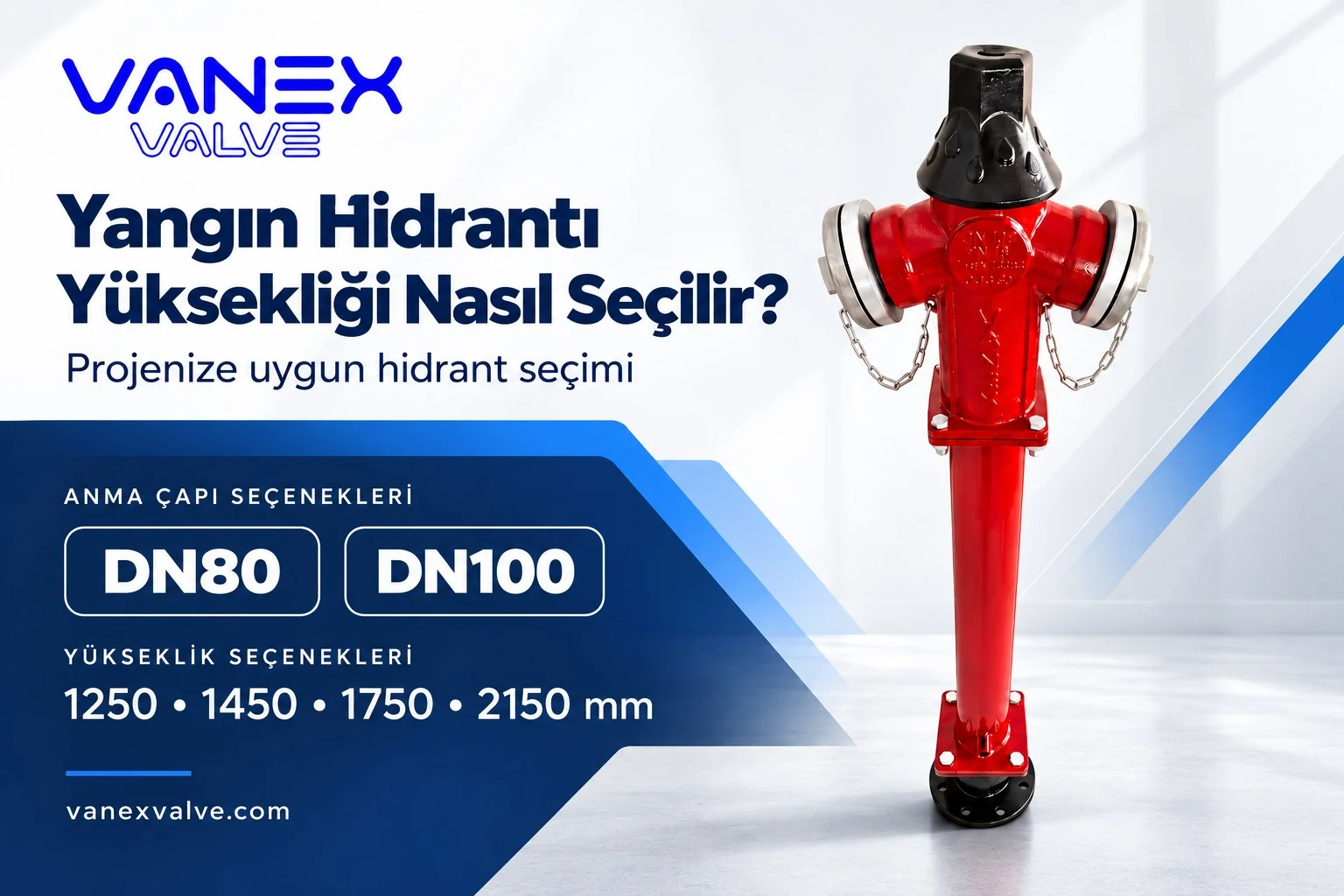
6. Comparing lengths such as 1250, 1450, 1750 and 2150 mm
When comparing products offered in these lengths, first confirm whether the stated dimension is overall height or bury depth.
Within a product family where the above-ground section remains constant and the underground barrel varies, longer versions may accommodate deeper connections. However, it is not technically sound to assign a particular length to a warm or cold region without reviewing the dimensional drawing.
The correct comparison brings together the required connection elevation, the intended above-ground position and the manufacturer’s dimensions.
7. Height, DN and PN are different selection criteria
Hydrant height concerns installation geometry. DN identifies nominal size, while PN identifies the pressure designation. A longer hydrant does not automatically deliver more flow or have a higher pressure rating.
Required flow and available operating pressure must be assessed separately, taking account of pipe sizes, system losses, the pump and water supply, and the hydrant’s hydraulic characteristics.
8. Information to provide before ordering
Prepare the following information:
Required nominal size and pressure rating.
Finished ground level.
Inlet connection elevation and connection type.
Required bury depth and its measurement reference.
Number, type and orientation of hose outlets.
Freezing, drainage and groundwater conditions.
Any breakaway design or local approval requirements.
Frequently asked questions
Is the tallest hydrant the safest choice?
No. The suitable model is the one that matches the project elevations and the manufacturer’s installation requirements.
Can an oversized hydrant simply be buried deeper?
Only within the installation limits permitted by the manufacturer. Excessive burial can affect outlet accessibility and, on some models, the breakaway arrangement.
Can the hydrant be extended later?
Only use an extension system and procedure approved by the manufacturer for the specific model.
Selecting a fire hydrant requires the connection depth and above-ground operating position to be assessed together. When preparing a product enquiry for VANEX VALVE, include the project elevations, connection dimensions and site conditions so that the appropriate model can be technically evaluated.